
June 17, 2026
Gamification in Higher Education: Using ClassMana for University Students
Gamification in higher education is an increasingly popular strategy for boosting student engagement, motivation, and
retention across universities and colleges. While tools like ClassMana are often associated with primary and secondary
education, they hold immense potential for higher education settings, including bachelor's and master's degree programs.
Why Gamify University Courses?
At the university level, students often deal with heavy workloads, complex materials, and a high degree of independence.
Integrating game mechanics helps counter the isolation some higher education students feel, transforming a traditional
lecture into a collaborative and interactive environment.
By bringing ClassMana into your higher education classroom, professors and lecturers can:
- Foster healthy competition and collaboration.
- Reward students for active participation in seminars.
- Make the journey of earning a bachelor or master's degree more engaging.

Broad Impacts of Gamification in Higher Education
While specific studies outline quantifiable metrics, the general implementation of gamification in higher education has
shown several overarching benefits:
1. Increased Collaboration and Metacognition
In studies focused on teacher training and pre-service educators, introducing team-based mechanics significantly boosted
peer-to-peer collaboration. Because a student taking damage or losing points affects their teammates, university
students experience increased accountability. While adult learners might initially find fantasy themes "childish,"
researchers noted that resistance drops rapidly once students realize that in-game progress leads to tangible,
real-world university perks.
2. Lowering Dropout Rates in STEM
In notoriously difficult university courses (like Introduction to Programming or Calculus), gamification has been shown
to lower dropout rates. The immediate feedback loop of earning Experience Points for small tasks—like completing a
reading or helping a peer debug code—keeps students engaged during weeks when dropout rates traditionally spike. Turning
stressful formative assessments into collaborative "Boss Battles" reframes quizzes into engaging problem-solving
exercises.
3. Overcoming Hesitation in Language Courses
For university language or communication courses, gamification provides a lower-stakes environment for adults to make
mistakes. Awarding points for simply attempting to participate shifts the focus from perfection to participation.
Adult students also highly appreciate skill trees, which allow them to choose rewards that suit their own learning
styles, fostering autonomy.
What the Academic Research Says
Note: The academic studies referenced below specifically evaluated Classcraft. Following its discontinuation, ClassMana
was built to serve as its most accurate successor. By offering the same core mechanics and features, ClassMana ensures
that the powerful pedagogical benefits highlighted in these studies remain fully applicable and accessible to educators
today.
These studies have demonstrated the significant impact of this specific approach to educational gamification on
university students. Here are a few notable findings from the academic research:
1. Improving Engagement and Retention in Online Contexts
In a 2025 study on gamification in higher education by Martínez Sánchez,
researchers evaluated the impact of Classcraft on university students, particularly in online learning contexts where
educators often struggle with student disengagement. By comparing a gamified study group (125 students) against a
traditional control group (118 students), the results demonstrated that gamification directly led to increased student
engagement. Moreover, students in the gamified group showed improved retention of course content and better development
of fundamental competencies related to their degree programs.
2. Improving Motivation and the "Four C's" in Engineering
A 2022 study published in MDPI explored the implementation of gamified
learning within a first-year university mathematics course for engineering students. Researchers utilized Classcraft to
compare a gamified cohort against a control group taught through traditional methods. The findings demonstrated a clear
academic advantage for the gamified group, who achieved significantly higher mean marks. Furthermore, the gamified
activities and associated group projects successfully improved students' mastery in cultivating four essential "super
skills": critical thinking, communication, collaboration, and creativity.
3. Supporting English-Medium Instruction (EMI) Programs
A 2020 book chapter published by IGI Global explores the benefits of
using role-playing gamification platforms in English-Medium Instruction (EMI) programs for university students. Teaching
disciplinary content in a non-native language often leads to student disengagement. Researchers found that gamified
systems effectively combat that lack of motivation and digital distractions, providing an innovative framework for
lecturers to dynamize the classroom and improve academic outcomes in EMI environments.
4. Enhancing Motivation in Specialized Medical Training Courses
A 2021 study published in PubMed Central examined the
implementation of gamified learning systems in an Immunology and Immunization Training course for university pharmacy
students. The study investigated students' motivation to engage with the system and found that "value" and "enjoyment"
were the primary drivers for participation. The tool's ease of use significantly contributed to that enjoyment.
Furthermore, granting adult learners the autonomy to choose their degree of engagement positively impacted how much they
valued the system. The authors concluded that gamification provides a strong foundation for boosting motivation, making
it a viable strategy for rigorous academic programs where engagement is often challenging.
5. Enhancing Grammar Performance of Adult Learners
A
2021 study on ResearchGate
investigated the effect of Classcraft on the grammar performance of adult learners. The research demonstrated that
incorporating gamified platforms into adult language education provides a more engaging framework for mastering complex
grammar rules compared to traditional instruction methods. The study highlights how game mechanics can lower affective
filters, leading to noticeable improvements in adult learners' grammatical accuracy and overall language proficiency.
Practical Tips for Lecturers
If you are a professor or teaching assistant looking to deploy ClassMana in your bachelor's or master's degree courses,
here is how you can adapt the platform for an adult audience:
Focus on the Mechanics over the Theme
While younger students might focus on the lore layer, university students resonate deeply with the systems: clear
progress tracking, distinct objectives, and team accountability.
Provide "Adult" Rewards & Professional Autonomy
Gamification in higher education is most effective when the in-game currency buys relief from common academic stressors
or mimics professional flexibility. Great examples include: a 24-hour extension on a deadline (The Flexible Worker), the
ability to drop the lowest quiz score, gaining a "cheat sheet" index card for an exam, or a guaranteed 15-minute 1-on-1
review session with the professor (The Consultant).
Emphasize Career and Professional Skills
Frame the acquisition of Experience points around employability rather than just compliance. Award points for providing
constructive peer review, demonstrating leadership during group work, arriving prepared for labs, or asking insightful
questions during lectures.
Provide Total Transparency on Grades
University students are highly focused on their GPAs and syllabus requirements. Be explicitly clear in your syllabus
about how the game interacts with their actual grades, ensuring they know they cannot fail the course simply by losing
Health points in the platform.
Foster Community in Large Halls
Commuter campuses and massive lecture halls can often lead to feelings of isolation. Use the team-based features in
ClassMana to create smaller communities and foster interaction where students might otherwise remain anonymous.
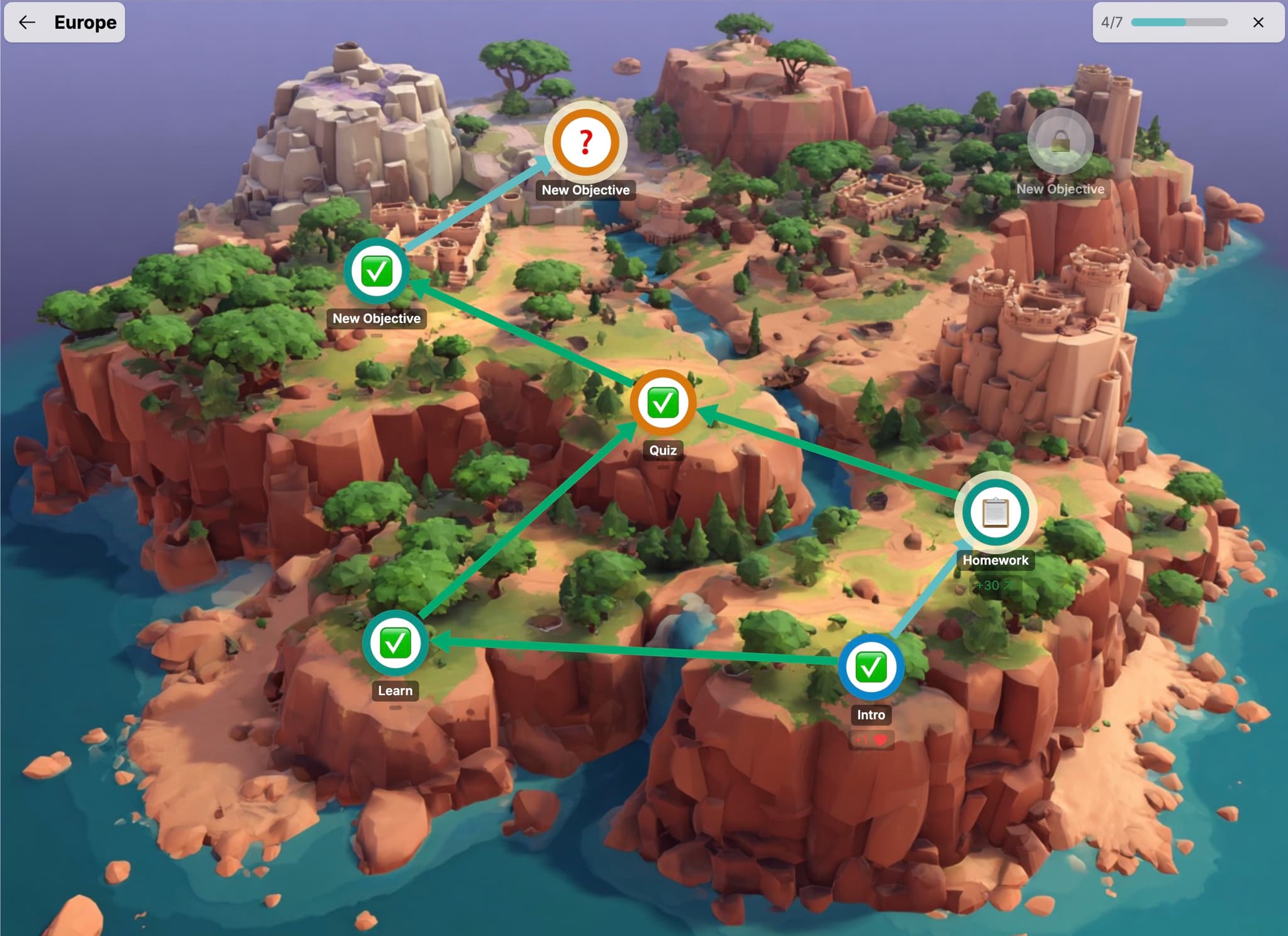
Self-Paced Learning and Flipped Classrooms via Quests
Transform your traditional syllabus into an interactive map. Connect readings, lectures, and assignments into a
progression flow. If you run a flipped classroom, Quests are the perfect tool to ensure adult learners actually complete
the pre-reading before showing up to the live seminar.
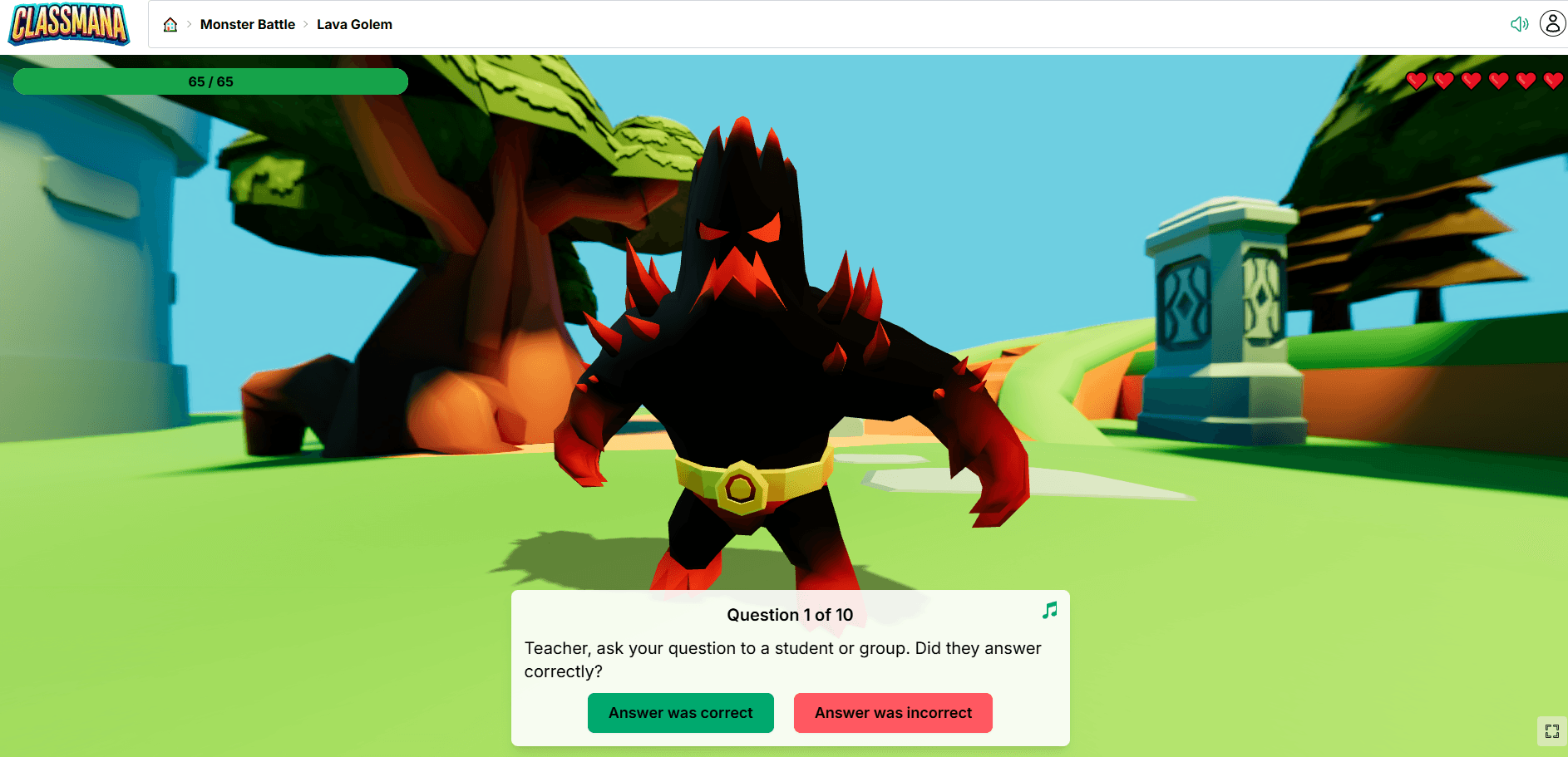
Interactive Reviews via Monster Battles
Ditch the traditional midterm review sheet. Use the Monster Battle tool to turn formative assessments and review
sessions into collaborative team challenges where answering questions correctly "deals damage" to a boss.
Equitable Seminars with the Random Picker
Ensure fair participation in smaller seminar classes by using the random picker tool to call on students or randomly
assign presentation slots, removing lecturer bias and keeping students engaged.
Decentralize the "Game Master" Role
In higher education, the hierarchical gap between student and teacher is narrower. Consider allowing student groups to
take turns running the Boss Battles, designing Quest pathways for their peers, or awarding Experience points for a week
to increase their sense of ownership.
By tailoring the gamified experience to the needs and stress-points of university students, ClassMana can help foster a
highly productive, engaging, and collaborative higher education environment.
Join the Conversation! Have thoughts or questions about this article? Join our ClassMana Facebook Community to share your ideas, ask questions, and connect with other like-minded educators!