
October 24, 2026
Best Classroom Gamification Tools for Middle and High School
Gamification works wonders in a third-grade classroom. A sticker chart, a points total, a cute character, and the class
is hooked. Then you try the same thing with thirteen-year-olds, or sixteen-year-olds, and it falls flat. "I got a point.
So what?"
Older students aren't less motivated by games. Most of them play video games every day. They're just much better at
spotting a game that's shallow. If you want gamification to work in middle and high school, you need a tool with real
depth: progression, choices, teamwork and something they won't outgrow by October.
In this article, we compare four classroom gamification tools with older students in mind.
Full disclosure: we make ClassMana, one of the tools below. We've aimed to be fair to every
product and to say clearly when another tool is a better fit. Information about other products comes from their public
websites as of October 2026.
A quick note on quiz games
You'll often see Kahoot, Blooket and Gimkit on lists like this. They're great tools, but they're a different
category: quiz and review games you play for one activity. This article is about classroom gamification, a system
that runs across the whole school year and rewards behavior, effort and teamwork. Many teachers use both.
What to look for with older students
- Depth that lasts. A points total is exciting for a week. Levels, unlockable gear, powers and class events give students new goals all year.
- It shouldn't feel babyish. Teenagers will reject anything that looks like it was made for seven-year-olds. Look for visuals and mechanics that feel like a real game.
- Choice and identity. Older students want to express themselves. Customizable characters and meaningful choices (like which power to use) matter.
- Teamwork, not public shaming. Team goals and peer support work better than a ranking that singles students out.
- Fast for the teacher. Secondary teachers often see five or more classes a day. Awarding a reward must take seconds, and setting up multiple classes should be easy.
- Privacy. The less student data a tool needs, the easier it is to get started.
ClassMana
Best for: teachers who want a full classroom RPG that works from primary school all the way to high school and
beyond.
ClassMana turns your classroom into a role-playing game. Every student has an animated 3D avatar they customize and
level up with Experience, unlocking new gear across 35 levels, plus pets. They earn mana to spend on powers:
real classroom privileges you define, like choosing a seat, listening to music during independent work, or extra time on
an assignment. Warnings lower health without removing anything they've earned, and a student who falls redeems
themselves with a positive action. Gold buys items in the class shop.

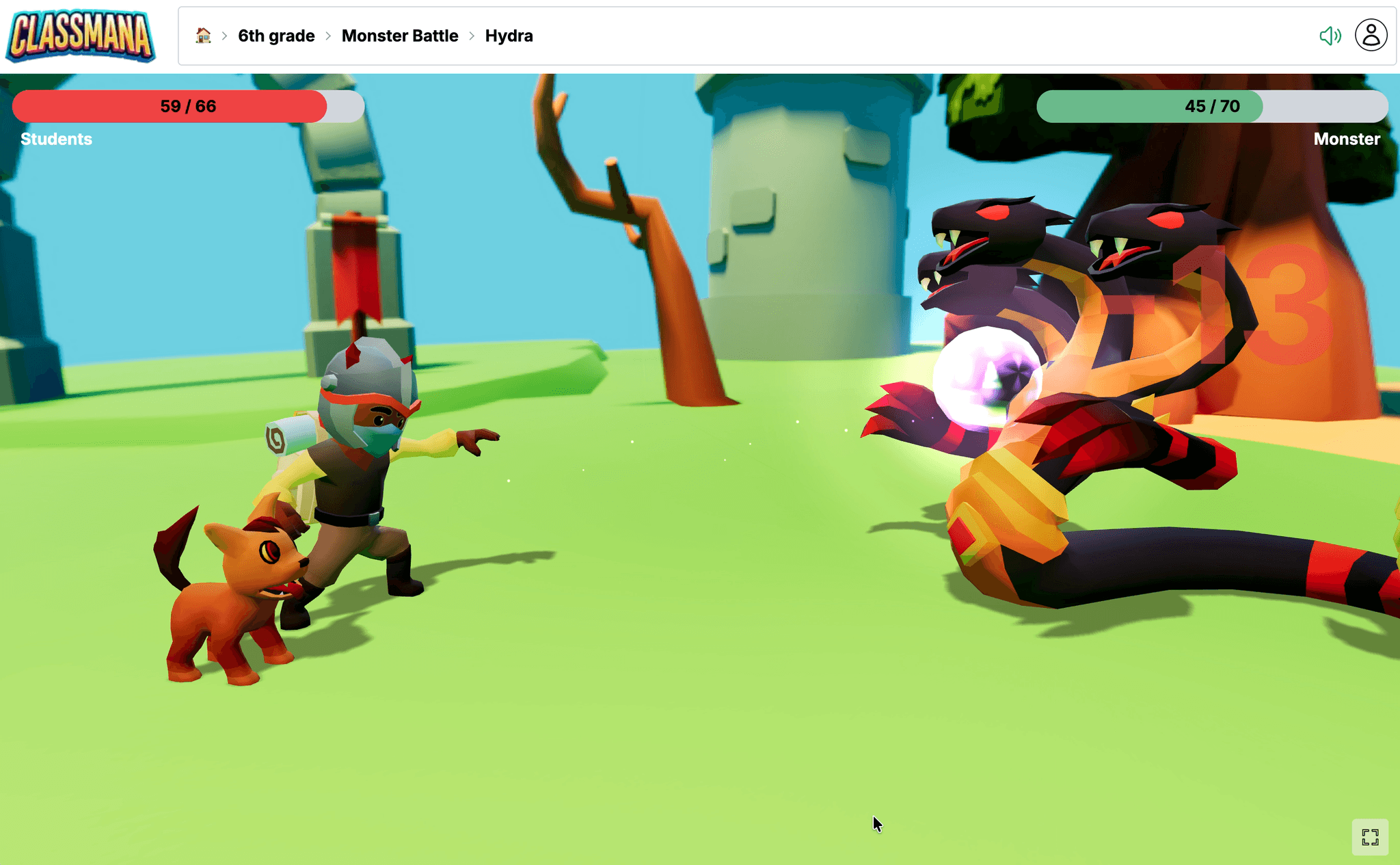
For the whole class, there's the Monster Battle (a 3D boss fight for review), the Silence Challenge (a noise
meter that turns quiet work into a class goal) and Mystery Events. Teams let students heal and support each
other. The optional Quests add-on adds story-based learning adventures with maps, branching paths and auto-graded
quizzes.
For secondary teachers with many classes, shared configuration lets you set up rewards, warnings, powers, shop items
and mystery events once and reuse them across all your classes. And it's not just for younger students: teachers use
ClassMana in high school and even at university. See
using ClassMana in higher education.
Pros:
- Real game depth: avatars, levels, powers, health, teams and boss battles
- Polished 3D visuals that feel like a game, not a worksheet
- Built for teamwork and redemption, not shame
- Students log in with their first name and a login code; no emails or personal information needed
- A single teacher can start today, without waiting for a school decision
Cons:
- No parent messaging and no native apps (it's a mobile-friendly web app)
- No referral or discipline tracking, and no school-wide PBIS analytics
- LMS integration is coming soon, not available yet
- After the free trial, paid plans start from $65 per year per teacher (School plan from $1 per student per year, minimum 150 students). See pricing.
Critter Coin
Best for: schools that want a school-wide house system with a strong game feel.
Critter Coin is a gamified PBIS and character-building platform. Students earn coins that count toward their house and
their own rewards-store balance. Houses compete in rounds, students can collect critters and care for virtual pets, and
an optional add-on gives the class a shared 3D world that progresses as students earn coins. There are also quests and
AI features, and Critter Coin says it's suitable for students of all ages.
Pros:
- Rich gamification centered on houses, collectibles and pets
- House competition can build school spirit across grades
- Free core for a school's first 20,000 coins; students don't need logins
- Native apps and Clever and ClassLink support
Cons:
- Designed to be set up school-wide, so it's harder for one teacher to start alone
- The 3D world is shared by the class, rather than a personal character for each student
- Several features are paid monthly add-ons
Read more: ClassMana vs Critter Coin
ClassDojo
Best for: teachers who mainly want free points and strong parent communication.
ClassDojo is free for teachers and best known for its points, skills and family communication (with automatic
translation in 190+ languages). In 2026, ClassDojo is putting more emphasis on middle and high school, with a redesigned
experience for older students and teacher-student messaging for students aged 13 and up.
Pros:
- Free, and familiar to many students and families
- Excellent parent communication
- Growing support for older students
Cons:
- The game side is light: the focus is on points, skills and communication
- Teachers looking for deep progression for teenagers may want more
If you're considering a switch, see our ClassDojo alternative page and the
ClassMana vs ClassDojo comparison.
ClassBank
Best for: teachers who want to combine behavior management with financial literacy.
ClassBank is a classroom economy. Students have checking and savings accounts, hold classroom jobs with salaries, and
can pay bills, rent or fines. There's a class store, and the Pro plan adds interest. It's used from elementary through
high school, and it's a good fit for older students learning about money.
Pros:
- Teaches real money concepts, which suits teenagers well
- Free teacher plan with unlimited students; Pro is $100 per year
- Classroom jobs give students real responsibility
Cons:
- It's an economy, not a game: no avatars, levels or boss battles
- A realistic economy takes setup and ongoing management
Read more: ClassMana vs ClassBank
Summary table
| Tool | Best for | Personal avatar | Powers / privileges | Team play | Single teacher can start | Price |
|---|---|---|---|---|---|---|
| ClassMana | Full classroom RPG, all ages | ✅ 3D, 35 levels of gear | ✅ | ✅ Teams | ✅ | From $65/yr per teacher |
| Critter Coin | School-wide house system | ➖ Pets, critters | Not advertised | ✅ Houses | ➖ School-wide setup | Free core + monthly add-ons |
| ClassDojo | Free points + parent messaging | Not advertised | Not advertised | Not advertised | ✅ | Free |
| ClassBank | Financial literacy | ❌ | Not advertised | Not advertised | ✅ | Free; Pro $100/yr |
Last updated: October 2026. Features and prices change; check each vendor's website.
Conclusion
For younger students, almost any points system works for a while. For middle and high school, depth makes the
difference. Students need to see their own progress, make choices, and work together toward something bigger than a
number.
- Choose Critter Coin if your whole school wants a house system.
- Choose ClassDojo if parent communication is your top priority.
- Choose ClassBank if financial literacy is a learning goal.
- Choose ClassMana if you want a real classroom game your students won't outgrow, from primary school to university.
Try ClassMana for free. The instant tools like the Silence Challenge and Monster Battle are
free, and you can use a trial class fully for three weeks.
Join the Conversation! Have thoughts or questions about this article? Join our ClassMana Facebook Community to share your ideas, ask questions, and connect with other like-minded educators!